
Resources
All our latest audiology news and views in one place.
NHS or Private Audiology: What’s the Difference?
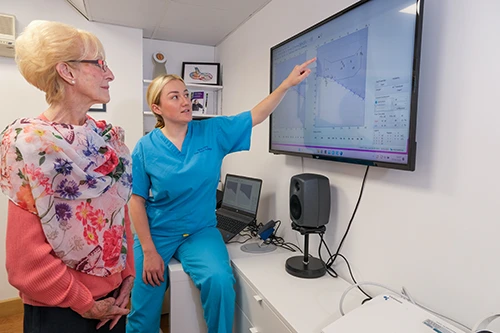
If you've started looking into your hearing and found yourself wondering whether you should use the NHS or see a private audiologist, you're certainly not alone. It's also understandable if you're confused by the different options.
You can access hearing care through the NHS, visit a high-street provider such as Boots or Specsavers, or make an appointment with an independent audiology clinic such as Byrom Audiology.
So, what's actually different?
The answer isn't simply that one is "free" and the other is "private". The biggest differences can be around choice, access, appointment time, hearing aid technology and the level of ongoing support and aftercare you receive. And importantly, there isn't one option that's right for everyone.
How does NHS audiology work?
NHS audiology provides an important service for people with hearing loss. If you're referred and assessed as needing hearing aids, NHS hearing aids are provided free of charge as a long-term loan, including batteries, repairs and follow-up care through the NHS hearing aid service.
NHS audiology can provide hearing assessments, hearing aid fitting and follow-up care, although the exact services available can vary depending on your local NHS provision. NHS hearing aids can be very effective, and choosing an NHS hearing aid doesn't mean you're receiving an inferior level of technology.
However, NHS services work within NHS pathways and local arrangements. This can mean that the range of hearing aids, appointment options and additional solutions available to you may be more limited than they are privately. Waiting times can also sometimes be longer than for private treatment.
For many people, NHS hearing care provides everything they need. But if you'd like more choice, more time with an audiologist or a different level of ongoing support, private audiology is another option.
What does private audiology offer?
With private audiology, you pay for your assessment, treatment and/or hearing aids rather than accessing care through an NHS pathway. That means there is a cost involved, but it also gives you greater freedom over the care and technology you choose.
Depending on the provider, private audiology can give you access to:
- A wider choice of hearing aid styles and manufacturers
- Smaller and more discreet hearing aids
- More advanced hearing aid technology
- Rechargeable and Bluetooth-enabled devices
- Specialist solutions for particular hearing needs
- More flexibility around appointment times
- Longer appointments and more time to discuss your hearing
- More frequent follow-up appointments
- Ongoing fine-tuning and personalised support
The NHS itself explains that people who choose private hearing care may have access to a wider range of hearing aids, including smaller and less visible models.
But perhaps the biggest difference is that you have more choice about what happens next.
Does private mean better hearing aids?
Not necessarily. This is an important distinction.
An NHS hearing aid can be an excellent solution, and a more expensive private hearing aid isn't automatically going to give you better hearing.
The right hearing aid depends on your hearing loss, your ears, your lifestyle and the situations where you find hearing difficult.
For example, someone who mainly struggles with one-to-one conversations at home may have very different needs from someone who regularly attends restaurants, meetings, concerts or large family gatherings.
Private audiology gives you access to a broader range of solutions and allows your audiologist to spend more time exploring which one is appropriate for you.
At Byrom Audiology, we don't believe in recommending the most expensive hearing aid simply because it's the most expensive. We look at what you're trying to achieve and recommend a solution around your hearing, your lifestyle and your priorities.
What about the fitting and verification of hearing aids?
Choosing the right hearing aid is only part of the process. How that hearing aid is fitted and adjusted can be just as important.
A hearing aid is programmed using your hearing test results, but there are further checks that can help establish how it is actually performing in your ear.
One example is Real Ear Measurement (REM), also known as probe microphone measurement. This involves placing a very fine tube close to the eardrum so the audiologist can measure the sound produced by the hearing aid in your individual ear.
The British Society of Audiology has specific practice guidance for verification using probe microphone measurements, reflecting the importance of objective verification when fitting hearing devices.
At Byrom Audiology, we take a particularly thorough approach to hearing aid fitting, using more verification checks than a standard high-street fitting process. This gives us additional information to help ensure your hearing aids are performing appropriately for your hearing and your needs.
We don't simply fit the hearing aids and send you home.
We check, listen and adjust.
And because everyone's ears, hearing loss and listening needs are different, we can continue to fine-tune your hearing aids as you become accustomed to them.
What does private aftercare include?
This is an area worth considering when comparing private hearing care.
The initial price of a hearing aid isn't necessarily the whole cost of owning one. It's worth asking any provider exactly what is included in the price and what you might need to pay for later.
At Byrom Audiology, we believe your aftercare should be part of the service rather than an afterthought.
We offer more robust aftercare, with patients seen more frequently and given longer appointments when they need them. This gives us time to listen to how you're getting on, make adjustments and deal with any problems rather than simply checking that the hearing aids are switched on and working.
We also include the equipment and services needed to maintain your hearing aids as part of the price of your hearing aid package, so you know what you're paying for from the outset.
There are no unexpected maintenance costs simply because your hearing aids need routine care.
When you're comparing private providers, it's therefore worth asking:
- How many follow-up appointments are included?
- How long are those appointments?
- Is hearing aid fine-tuning included?
- Is routine cleaning and maintenance included?
- What happens if the hearing aid needs servicing?
- Are replacement parts or consumables included?
- Will there be additional charges for future appointments?
The answers can make a significant difference to the overall value of a hearing aid package.
What about earwax removal?
Earwax is another area where the difference between NHS and private care has become more noticeable.
NHS earwax provision varies between areas, and not every GP surgery offers earwax removal. The NHS advises that if your GP surgery doesn't provide the service, you may be referred elsewhere or may need to pay for earwax removal privately.
This has led more people to search specifically for private earwax removal, particularly when blocked ears are affecting their hearing or preventing them from having a hearing test.
At Byrom Audiology, earwax removal is carried out by qualified audiologists at our Sheffield clinics. We examine the ear first and use the most appropriate method for the individual.
If you're experiencing muffled hearing, a blocked sensation or discomfort, it's important not to assume that you simply need a hearing aid. Sometimes the problem is much simpler – and professional ear examination can help establish what's actually going on.
What is the difference between an independent audiologist and Boots or Specsavers?
This is another question we hear regularly. Boots and Specsavers are both established high-street providers of hearing care. They offer hearing tests, hearing aids and other hearing services, and Specsavers also provides both NHS-funded and private hearing care.
So what's different about an independent audiologist?
The key difference is the independent model.
A high-street provider operates as part of a larger organisation, with established product ranges, systems and service structures.
An independent clinic is a standalone audiology business. That can mean greater freedom to select hearing technology from across the market and a more direct relationship between you and your audiologist.
At Byrom Audiology, we work with a range of hearing technology rather than expecting every patient to choose from a single house range.
That matters because hearing isn't one-size-fits-all.
The hearing aid that works brilliantly for your neighbour might not be the right solution for you.
Does an independent audiologist give you more choice?
Potentially, yes - particularly when it comes to hearing aid manufacturers, technology and specialist solutions.
Different hearing aid manufacturers approach sound processing, connectivity, noise management and design in different ways.
An independent audiologist can look across those options and consider which technology is most appropriate for you.
At Byrom Audiology, we also offer specialist hearing solutions that go beyond conventional hearing aids, including Lyric, Roger technology and Adhear, as well as hearing aid fine-tuning and servicing for existing devices.
We can also work with people who already have NHS hearing aids. You don't have to buy a new hearing aid simply because you're seeing a private audiologist. Sometimes your existing hearing aids simply need adjusting properly.
Our hearing aid fine-tuning and servicing service uses Real Ear Measurement to check how your hearing aids are performing in your ears, rather than relying solely on standard manufacturer settings.
What about the personal side of hearing care?
This is perhaps the difference patients notice most. Hearing care isn't simply about testing how well you can hear a series of beeps!
It's about understanding where hearing is causing problems in your everyday life.
- Can you follow conversations when several people are talking?
- Can you hear your family from another room?
- Are restaurants exhausting because you're constantly trying to work out what people are saying?
- Do you struggle to hear your partner when the television is on?
- Are you missing things at work?
These details matter when deciding what type of hearing support could actually make a difference.
At an independent clinic, you can build a direct relationship with your audiologist. At Byrom Audiology, Peter, Nicole, Lauren and the team get to know the individual behind the audiogram – not just the results on the screen.
So, should you choose NHS or private audiology?
There's no universal answer. For some people, NHS hearing care provides everything they need, at no cost for the hearing aids and associated NHS aftercare.
For others, the ability to access an appointment more quickly, explore a wider range of hearing aids or receive more personalised support makes private audiology the preferred option.
And for some people, there's a combination.
You might use NHS services for your hearing aids but see a private audiologist for an additional assessment, second opinion, specialist solution or help with an existing hearing aid.
The important thing is to understand your options rather than assuming you have to follow one particular route.
Why choose Byrom Audiology?
Byrom Audiology is an independent audiology clinic serving patients across Sheffield and South Yorkshire from our clinics in Dore and at Thornbury Hospital.
Our approach is straightforward: listen to you first, understand what you're struggling with, and then help you find the right solution.
That might be a hearing aid. It might be earwax removal. It might be fine-tuning an existing device. Or, sometimes, it might be reassuring you that you don't need anything at all right now.
We offer comprehensive hearing assessments, hearing aids, earwax removal, tinnitus support, specialist hearing solutions and ongoing hearing aid care.
Our private hearing aid service is designed to give you not just the technology, but the time, fitting, verification and aftercare needed to get the most from it.
You don't need to wait for a referral to see us, and you don't have to know exactly what you need before making an appointment.
Book a hearing assessment at Byrom Audiology and we'll help you understand what's happening with your hearing and what your options are.
Come along to one of our hearing aid events
If you're curious about hearing aids but aren't quite ready to book an appointment, our hearing aid events are a great opportunity to learn more in a relaxed, informal setting.
Our events are designed around the questions people actually ask – from how hearing aids work and what the different styles look like, to what modern technology can do and how to choose a solution that fits your lifestyle.
There's no need to arrive knowing anything about hearing aids. Simply come along, ask questions and find out what's available!
Read more about our upcoming Byrom Audiology hearing aid event on 24th October - or just go ahead and book!
Ready to find out more about your hearing?
Frequently Asked Questions about Hearing Care
Can I switch from NHS to private audiology?
Yes. You can choose to see a private audiologist even if you currently use NHS hearing services. You don't need to stop using NHS services first, and a private audiologist can assess your hearing and discuss whether additional support or different technology could be useful.
Can a private audiologist help with my NHS hearing aids?
Potentially, yes. Depending on the make, model and type of support required, an independent audiologist may be able to assess, adjust and fine-tune your existing hearing aids. Seeing a private audiologist doesn't automatically mean you need to replace your current hearing aids.
How often should I have a hearing test?
There isn't one fixed interval that's right for everyone. Regular hearing checks can be useful because hearing loss can develop gradually, sometimes without you noticing a significant change. Your audiologist can advise you on how often your hearing should be reassessed based on your individual circumstances.
Do I need a hearing test before seeing a private audiologist?
No. If you're concerned about your hearing, you can book a hearing assessment with a private audiologist. Your audiologist can assess your hearing, discuss any difficulties you're experiencing and explain what your options are.
What should I ask a private audiologist about the cost of hearing aids?
Don't just ask about the price of the hearing aid itself. Ask what is included in the package, including fitting, verification, follow-up appointments, cleaning, maintenance, repairs and future adjustments. Understanding the full cost of aftercare can make it easier to compare different providers.
You can always book a hearing test with us and put your mind at rest
What Our Customers Say...
Over 150 five-star Google reviews reflect our high-quality service.